
Your sales team spends hours chasing leads, but many never reply, never schedule a call, and never become customers. Meanwhile, genuinely interested prospects can slip through the cracks because they get treated the same as everyone else.
This creates a common problem for growing businesses. When every lead looks equally important, it’s difficult to know where your team should focus first.
Lead scoring solves this problem by assigning values to leads based on their behavior and characteristics. Instead of guessing who is ready to buy, sales and marketing teams can prioritize the prospects most likely to become customers.
In this guide, you’ll learn what lead scoring is, how it works, the different types of lead scoring models, common mistakes to avoid, and how businesses use lead scoring to improve conversions.
Quick Answer: What Is Lead Scoring?
Lead scoring is a system that assigns points to potential customers based on their characteristics and actions to determine how likely they are to become buyers. Businesses use lead scoring to identify high quality leads, prioritize sales outreach, and focus attention on prospects showing strong purchase intent.
For example, visiting a pricing page might add 10 points while requesting a product demo could add 25 points. The higher the score, the more likely the lead is ready for sales contact.
Lead scoring helps sales and marketing teams spend less time chasing unqualified prospects and more time focusing on leads most likely to convert.
Key Takeaways
• Lead scoring ranks leads based on fit and engagement
• Higher scores often indicate stronger buying intent
• Sales teams use lead scores to prioritize outreach
• Lead scoring can use demographic and behavioral data
• Better prioritization often leads to higher conversion rates
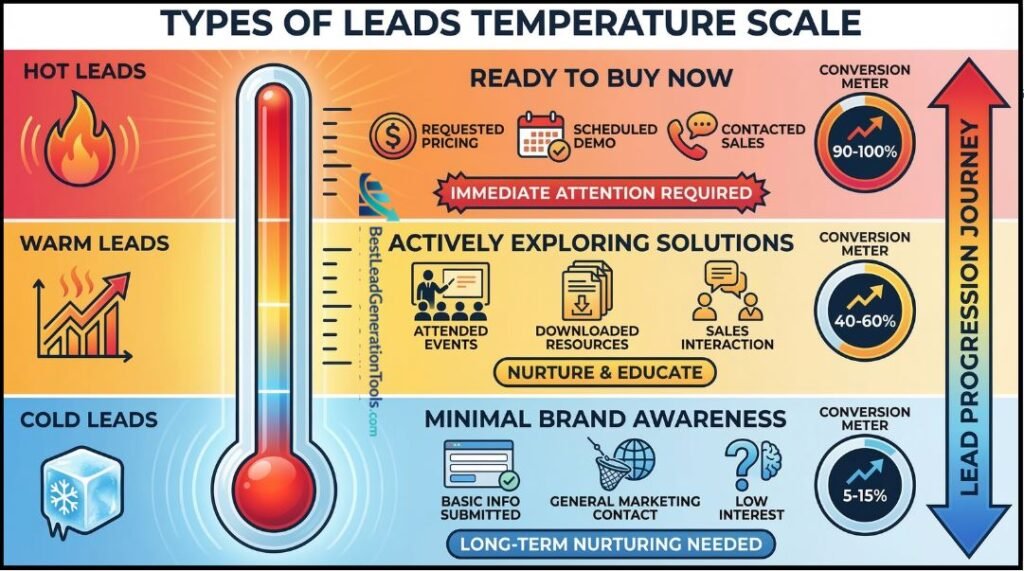
A simple definition of lead scoring
Lead scoring is a method businesses use to rank potential customers based on who they are and how they interact with a company. Each action or characteristic receives a point value. The combined score helps determine how interested and qualified a lead may be.
Some businesses score leads based on factors like job title, company size, or industry. Others track behaviors such as website visits, email engagement, and content downloads. Many use a combination of both.
Why businesses use lead scoring systems
Your sales team cannot contact every lead with the same level of attention. Lead scoring helps identify who deserves immediate outreach and who may need more nurturing before entering the sales process.
This creates a more efficient workflow. Sales teams spend more time with highly interested prospects and less time pursuing leads that are unlikely to convert. Marketing teams also gain clearer insight into which campaigns and channels attract the highest quality leads.
How Lead Scoring Works
Lead scoring works by assigning point values to actions and characteristics that signal buying interest. As leads interact with your business, they gain or lose points based on what they do and how closely they match your ideal customer profile.
Most lead scoring systems follow a simple process:
- Collect information about leads
- Assign point values to actions and traits
- Track engagement across channels
- Calculate a total score
- Prioritize leads based on score thresholds
The goal is simple. Instead of treating every lead the same, businesses use lead scores to identify who deserves immediate attention and who may need more nurturing.
Example Lead Score
Here is a simple example of how a lead scoring model might work:
• Visits pricing page: +10 points
• Downloads a buying guide: +15 points
• Requests a demo: +25 points
• Uses a personal email address: -10 points
Total Lead Score: 40 points
A higher score suggests stronger buying intent. Sales teams can use score ranges to decide which leads should receive immediate outreach.
For additional examples of how different actions can be assigned values, see our guide to lead scoring examples.
Assigning points to leads
Lead scoring starts by assigning point values to specific actions and characteristics. Every business creates its own scoring rules based on what matters most to its sales process.
For example, a lead who requests a demo may receive more points than someone who simply reads a blog post. A company decision maker may receive a higher score than an entry level employee because they are more likely to influence purchasing decisions.
The best way to determine point values is by reviewing past customer behavior. Look for patterns among people who eventually became customers. Their actions often reveal which behaviors deserve higher scores.
Tracking behaviors and engagement
Lead scoring systems continuously track how prospects interact with your business. Website visits, email activity, content downloads, and other actions can all contribute to a lead’s score.
Not every action carries equal weight. Opening an email may indicate light interest, while visiting a pricing page or attending a webinar often signals stronger intent.
Recency also matters. Someone who visited your website yesterday likely deserves more attention than someone who downloaded an ebook six months ago and never returned. Many systems adjust scores over time to reflect changing engagement levels.
Combining demographic and behavioral data
Lead scoring works best when it combines both fit and interest.
Demographic information helps determine whether someone matches your ideal customer profile. This can include company size, job title, industry, or location. Behavioral information shows whether they are actively engaging with your business.
For example, a lead might work at the perfect company but never open your emails. Another person might engage constantly but work in an industry you do not serve. Looking at both types of information helps businesses identify leads with the highest likelihood of converting.
The strongest lead scoring systems use both fit and engagement data together rather than relying on only one factor.
Why Lead Scoring Matters
Understanding how lead scoring works is important, but understanding why it matters is what turns it into a real business advantage. Lead scoring helps businesses focus on the right prospects, improve efficiency, and create a more predictable sales process.
Benefits of Lead Scoring at a Glance
• Prioritizes high intent prospects
• Improves sales efficiency
• Increases conversion opportunities
• Reduces wasted outreach
• Aligns marketing and sales teams
Helps sales teams focus on high quality leads
Not every lead deserves the same level of attention. Some prospects are actively researching solutions and ready for a conversation, while others are still gathering information.
Lead scoring creates a clear priority system by identifying which prospects show the strongest buying signals. A lead who requests a demo, visits your pricing page multiple times, and regularly engages with your content deserves faster outreach than someone who opened one email and never returned.
Instead of relying on guesswork, sales teams can focus their time on leads with the highest likelihood of converting.
Improves conversion rates
Lead scoring helps sales teams deliver more relevant and timely conversations. When reps understand what actions a prospect has taken, they can personalize outreach based on actual interests and behaviors.
For example, if a lead downloaded multiple case studies or repeatedly viewed a specific product page, your sales team gains insight into what matters most to that prospect.
Better timing and more personalized outreach often lead to stronger engagement and increased conversion opportunities.
Reduces wasted time and effort
Sales teams lose valuable time when they pursue leads that are unlikely to become customers. Every hour spent contacting unqualified prospects is time that could have gone toward more promising opportunities.
Lead scoring helps reduce this problem by filtering out poor fit leads and identifying signs of low engagement. Leads who stop interacting with your content or do not match your target customer profile can receive lower scores and less sales attention.
This creates a more efficient process and helps teams spend more time where it matters most.
Aligns marketing and sales teams
Lead scoring creates a shared understanding of what qualifies as a valuable lead. Marketing and sales teams can work from the same criteria instead of using different definitions of lead quality.
Marketing gains insight into which campaigns and content attract stronger prospects. Sales gains confidence that highly scored leads deserve attention.
This becomes especially important when determining when a prospect should move from a marketing-qualified lead to a sales-qualified lead. Our guide to MQL vs. SQL explains that handoff in greater detail.
Over time, both teams can refine scoring criteria based on real conversion data. This collaboration improves lead quality and creates a stronger, more effective sales process.
Common Factors Used in Lead Scoring
Lead scoring systems use different signals to determine whether a prospect is a good fit and how likely they are to become a customer. While every business uses different criteria, most scoring models rely on a small group of common factors.
Some factors help determine whether a lead matches your ideal customer profile. Others help measure buying interest and engagement. Together, these signals create a clearer picture of which prospects deserve attention first.
Common Lead Scoring Factors at a Glance
| Factor | What It Measures |
|---|---|
| Company size and job title | Customer fit |
| Website activity | Interest and engagement |
| Email engagement | Ongoing interaction |
| Form submissions | Buying intent |
| Purchase intent signals | Readiness to buy |
Company size and job title
Lead scoring often starts with demographic or firmographic information because businesses want to know whether a lead matches their ideal customer profile.
Company size matters because your product may work best for certain business types. A company with 500 employees may be a stronger fit than a startup with five employees depending on your target market.
Job titles also help identify decision makers. A Vice President of Sales or Chief Marketing Officer may receive a higher score than an entry level employee because they are more likely to influence purchasing decisions.
Industry and geographic location can also affect scores if your business serves specific markets.
Website activity
Website behavior often reveals how interested a prospect is in your product or service. Certain pages and actions indicate stronger buying intent than others.
For example, someone who visits your pricing page three times and compares product features usually deserves a higher score than someone who reads one blog article and leaves.
Businesses often track:
• Pricing page visits
• Product page views
• Return visits
• Time spent on site
• Video views or tool usage
Recent activity also matters. A lead who visited your website yesterday often deserves a higher score than someone who interacted with your content six months ago and never returned.
Email engagement
Email engagement shows how interested prospects are in hearing from you over time.
Leads who regularly open emails and click on links demonstrate stronger engagement than people who ignore your messages completely. The type of content someone interacts with also matters.
For example, clicking a case study, pricing guide, or product announcement may signal stronger intent than opening a general newsletter.
Common email engagement signals include:
• Email opens
• Link clicks
• Content downloads
• Consistent engagement patterns
Businesses also use negative scoring when engagement drops. Long periods of inactivity or unsubscribing from emails can reduce lead scores.
Form submissions
Forms often reveal how serious someone is about becoming a customer. Different forms indicate different levels of buying intent.
Signing up for a newsletter may show general interest. Requesting a demo or contacting sales usually signals much stronger intent.
High value forms often include:
• Demo requests
• Free trial signups
• Contact sales forms
• Quote requests
• Product consultations
The information submitted also matters. Business email addresses and complete form details often indicate more serious prospects than incomplete or low quality submissions.
Purchase intent signals
Purchase intent signals are actions that suggest someone may be actively preparing to buy.
For example, a prospect who repeatedly visits pricing pages, compares products, reads customer reviews, and researches alternatives often shows stronger buying intent than someone casually browsing content.
Businesses may also track:
• Product comparison page visits
• Customer review activity
• Multiple visits in a short period
• High activity after long periods of inactivity
• Third party intent data
These signals help identify leads who may be moving closer to a purchasing decision and deserve faster follow up from sales teams.
Types of Lead Scoring Models
Not all lead scoring systems work the same way. Some models focus on information prospects provide directly, while others track behavior or use artificial intelligence to identify patterns and predict future outcomes.
Many businesses use a combination of models rather than relying on a single approach. Each type helps answer a different question about lead quality and buying readiness.
Lead Scoring Models at a Glance
| Model | Uses | Best For |
|---|---|---|
| Explicit scoring | Demographic and profile data | Determining customer fit |
| Implicit scoring | Behaviors and engagement | Measuring interest level |
| Predictive scoring | AI and historical data | Identifying likely buyers |
| Negative scoring | Disqualifying signals | Filtering poor fit leads |
Explicit lead scoring
Explicit lead scoring assigns points based on information prospects provide directly. This information often comes from forms, surveys, CRM records, or profile details.
Businesses commonly score factors such as:
• Job title
• Company size
• Industry
• Geographic location
• Decision making authority
For example, a Director of Marketing at a company with 500 employees may receive more points than an entry level employee at a small business because they more closely match the ideal customer profile.
Explicit scoring works well when you have a clear understanding of who your best customers are.
Implicit lead scoring
Implicit lead scoring focuses on actions and behaviors that indicate interest.
Instead of asking who someone is, implicit scoring asks what they are doing.
Businesses often score behaviors such as:
• Website visits
• Pricing page views
• Content downloads
• Email clicks
• Webinar attendance
For example, someone who visits your pricing page five times and downloads a product guide may receive a higher score than someone who reads one blog article and never returns.
Behavior based signals often reveal buying intent more accurately than profile information alone.
Predictive lead scoring
Predictive lead scoring uses machine learning and artificial intelligence to identify patterns in customer data.
Instead of manually assigning every point value, predictive systems analyze historical sales data and determine which actions and characteristics are most likely to lead to conversions.
For example, the system might discover that leads who attend webinars, revisit pricing pages, and engage with certain email campaigns convert more often than others.
Predictive scoring can uncover patterns people may overlook and continuously improves as more customer data becomes available.
This approach works best for businesses with large amounts of lead and customer data.
Negative lead scoring
Negative lead scoring subtracts points when prospects show signs that they are unlikely to become customers.
This prevents low quality leads from receiving unnecessary attention from sales teams.
Common negative signals include:
• Long periods of inactivity
• Personal email addresses for B2B products
• Unsubscribing from emails
• Visiting career pages only
• Industries outside your target market
For example, if a lead has not engaged with your content for 90 days, your system might subtract points to reflect declining interest.
Negative scoring helps businesses keep their sales pipeline focused on prospects with stronger conversion potential.
Many businesses combine multiple scoring models together. A lead may receive points for matching the ideal customer profile, gain points through engagement, and lose points if signs of poor fit appear. Combining multiple approaches often creates a more accurate picture of lead quality.
Example of a Simple Lead Scoring System
Lead scoring becomes much easier to understand when you see it in action. While every business creates its own scoring rules, most systems follow the same basic idea: assign points based on fit and engagement, then prioritize leads based on the final score.
Here is an example of a simple scoring model for a software company selling to mid size businesses.
Sample scoring rules for a B2B company
| Action or Attribute | Score |
|---|---|
| Director or VP job title | +25 |
| Company with 500+ employees | +20 |
| Target industry match | +15 |
| Visits pricing page | +20 |
| Downloads a whitepaper | +10 |
| Requests a demo | +30 |
| Uses a personal email address | -10 |
| No engagement for 30 days | -5 |
These point values are only examples. Each business adjusts scores based on its customers and sales process.
Example lead score calculation
Imagine a prospect named Sarah who works as a Vice President of Marketing at a company with 300 employees.
Sarah takes the following actions:
• VP level job title: +25 points
• Company size match: +20 points
• Downloads a whitepaper: +10 points
• Visits the pricing page: +20 points
• Requests a demo: +30 points
Total Lead Score: 105 points
Sarah matches the ideal customer profile and has shown strong buying intent. Based on this score, she would likely become a top priority for sales outreach.
How sales teams prioritize leads based on scores
Many businesses create score ranges to help sales and marketing teams decide which leads deserve immediate attention.
75+ points: Hot lead
These leads show strong buying signals and often deserve immediate outreach from sales.
50 to 74 points: Warm lead
These prospects show interest but may need additional nurturing before they are ready to buy.
Below 50 points: Cold lead
These leads may remain in marketing campaigns until they show stronger engagement or better fit.
The exact scoring thresholds vary from one business to another, but the goal stays the same. Lead scoring helps teams identify which prospects deserve attention first so they can focus time and resources where they matter most.
Signs Your Business Needs Lead Scoring
Not every business needs a formal lead scoring system. If your sales team can personally review every lead and quickly decide who deserves attention, manual prioritization may work well enough.
As lead volume grows, however, that approach becomes harder to manage. Certain warning signs often indicate that a lead scoring system could improve efficiency and help your team focus on better opportunities.
Your business may need lead scoring if:
✓ Sales reps spend time chasing low quality leads
✓ New leads wait too long for follow up
✓ Marketing and sales disagree on lead quality
✓ Your team generates more leads than it can handle
✓ High value prospects occasionally slip through the cracks
Your sales team wastes time on poor leads
Sales teams often lose valuable time pursuing prospects who have little interest, poor fit, or no intention of buying. This creates frustration and reduces the amount of time available for stronger opportunities.
Without a clear prioritization system, every lead can appear equally important. Lead scoring helps solve this problem by identifying which prospects deserve attention first and which leads should receive less focus.
You generate more leads than you can handle
As marketing efforts grow, sales teams can quickly become overwhelmed by lead volume. When this happens, promising prospects may wait too long for outreach or get buried under lower quality leads.
For example, a company executive who repeatedly visits your pricing page may deserve immediate attention, while someone who read one blog article may not be ready for sales contact.
Lead scoring helps teams prioritize follow up so the most valuable opportunities receive attention first.
Marketing and sales disagree on lead quality
Marketing teams often focus on generating more leads, while sales teams focus on finding leads that convert. Without shared criteria, both teams can develop different ideas about what qualifies as a good lead.
Lead scoring creates a common system that both teams can use. Marketing gains insight into which campaigns attract stronger prospects, and sales gains confidence that highly scored leads deserve outreach.
This shared framework improves communication and creates better alignment across teams.
High value leads occasionally slip through the cracks
Many businesses assume they need more leads when the real problem is how existing leads are being managed.
High value prospects sometimes disappear simply because nobody recognized their importance quickly enough. A lead showing strong buying signals can easily get overlooked when every prospect receives the same treatment.
Lead scoring helps identify these opportunities early so sales teams can respond faster and focus attention where it matters most.
Best Tools for Lead Scoring
Many businesses start with simple spreadsheets or manual scoring methods. As lead volume increases, however, software tools can automate the process and update scores automatically based on customer behavior and engagement.
These tools help businesses track interactions, assign point values, and identify which prospects deserve attention first.
Lead Scoring Tool Types at a Glance
| Tool Type | Main Purpose |
|---|---|
| CRM platforms | Track contacts and manage lead scores |
| Marketing automation tools | Score engagement and campaign activity |
| AI powered tools | Predict which leads are most likely to convert |
Different businesses use different combinations depending on their size, sales process, and goals.
CRM platforms with built in lead scoring
Many customer relationship management platforms include lead scoring features as part of their core functionality.
CRM tools can track contact information, monitor activity, and automatically update lead scores as prospects interact with your business.
Examples include:
• HubSpot
• Salesforce
• Pipedrive
These tools work well for businesses that want lead scoring integrated directly into their sales workflow.
Marketing automation tools
Marketing automation platforms focus heavily on engagement tracking. They monitor actions such as email opens, content downloads, webinar attendance, and website activity.
Because these platforms connect closely with marketing campaigns, they help businesses understand which actions signal stronger buying intent.
Examples include:
• Marketo
• ActiveCampaign
• Pardot
These tools are often useful for businesses with larger content marketing and email strategies.
AI powered lead scoring platforms
AI powered lead scoring tools use machine learning to analyze historical customer data and identify patterns that predict conversions.
Instead of manually assigning every point value, these systems continuously analyze customer behavior and adjust scoring recommendations over time.
AI tools can uncover patterns that are difficult to identify manually and often improve accuracy as more data becomes available.
This approach generally works best for businesses with larger datasets and more complex sales processes.
If you’re ready to evaluate software rather than the scoring methodology itself, see our guide to lead scoring software.
Common Lead Scoring Mistakes to Avoid
Lead scoring can improve efficiency and increase conversions, but only when the system reflects real customer behavior. Many businesses create scoring models that look good on paper but produce poor results in practice.
Even small mistakes can cause sales teams to focus on the wrong prospects and overlook stronger opportunities.
Common lead scoring mistakes
✗ Overvaluing a single action
✗ Ignoring negative signals
✗ Leaving scoring rules unchanged
✗ Creating overly complex systems
Giving too much weight to one action
A common mistake is assigning too many points to a single action.
For example, imagine a business gives 50 points to anyone who downloads an ebook. Some people may download content simply out of curiosity and have no real intention of buying. If that one action carries too much weight, low quality leads can appear sales ready.
A better approach is to spread points across multiple behaviors.
Instead of:
• Ebook download: +50 points
Consider:
• Ebook download: +10 points
• Pricing page visit: +15 points
• Demo request: +25 points
Looking at multiple signals creates a more accurate picture of buying intent.
Ignoring negative signals
Lead scoring should subtract points as well as add them.
Some behaviors indicate declining interest or poor fit. Ignoring these signals allows weak leads to remain highly ranked even after engagement drops.
Common negative signals include:
• Long periods of inactivity
• Unsubscribing from emails
• Personal email addresses for B2B products
• Industries outside your target market
Negative scoring helps keep your sales pipeline focused on stronger opportunities.
Never updating your scoring model
Lead scoring should evolve as your business changes.
Customer behavior, products, markets, and sales processes shift over time. A scoring model that worked six months ago may no longer reflect what predicts conversions today.
Review your scoring rules regularly and compare lead scores against actual sales results. Feedback from your sales team can also help identify areas that need adjustment.
The most effective scoring systems improve over time rather than staying fixed.
Making the system too complicated
Some businesses create scoring systems with dozens of rules, categories, and point values. Complex systems become difficult to understand, maintain, and trust.
Start with a small number of meaningful signals and expand only when needed.
Focus on the actions and characteristics that consistently predict conversions. For many businesses, five to ten important criteria are enough to create an effective model.
Simple scoring systems are often easier to manage and produce more consistent results.
The most effective lead scoring systems stay simple, evolve over time, and rely on multiple signals rather than isolated actions.
How to Create a Lead Scoring System Step by Step
Creating a lead scoring system does not need to be overly complicated. Most successful scoring models start with a few important signals and improve over time as businesses learn more about what leads actually convert.
The goal is not to build a perfect system immediately. The goal is to create a practical process that helps your team identify stronger opportunities faster.
For a more detailed implementation guide, see how to build a lead scoring model.
Lead scoring setup checklist
✓ Define your ideal customer profile
✓ Identify high intent behaviors
✓ Assign point values
✓ Add negative scoring rules
✓ Set score thresholds
✓ Review and refine your model regularly
Step 1: Define your ideal customer
Start by identifying the types of customers most likely to buy from you.
Look at your existing customers and search for common characteristics such as:
• Job titles
• Company size
• Industry
• Geographic location
• Budget level
For example, a software company selling enterprise solutions may prioritize Directors, Vice Presidents, and decision makers at larger companies.
The clearer your ideal customer profile becomes, the easier it is to score leads accurately.
Step 2: Identify high intent actions
Next, determine which behaviors signal real buying interest.
Some actions show light curiosity, while others strongly suggest a prospect is considering a purchase.
High intent actions often include:
• Visiting pricing pages
• Requesting demos
• Downloading buying guides
• Attending webinars
• Contacting sales
For example, someone who requests a demo usually deserves a higher score than someone who only reads a blog article.
Focus on behaviors that consistently appear before conversions.
Step 3: Assign point values
Once you identify important behaviors and characteristics, assign point values based on their importance.
Actions that strongly predict purchases should receive more points than low commitment activities.
For example:
• Blog article visit: +5 points
• Ebook download: +10 points
• Pricing page visit: +15 points
• Demo request: +25 points
You can also assign points based on customer fit. A lead from your target industry or ideal company size may deserve additional points.
The goal is to create a balanced scoring system based on multiple signals rather than one isolated action.
Step 4: Add negative scoring rules
Lead scoring should reduce points when prospects show signs of poor fit or declining interest.
Negative scoring helps prevent low quality leads from appearing sales ready.
Common negative scoring signals include:
• Long periods of inactivity
• Unsubscribing from emails
• Personal email addresses for B2B products
• Job titles outside your target audience
For example, if a lead has not interacted with your business in 60 days, your system may subtract points automatically.
Negative scoring keeps your sales pipeline focused on stronger opportunities.
Step 5: Set score thresholds
After assigning points, create score ranges that help your team prioritize leads.
For example:
• 75+ points: Hot lead
• 50 to 74 points: Warm lead
• Below 50 points: Cold lead
These thresholds help sales and marketing teams decide which leads deserve immediate outreach and which leads should continue receiving nurturing content.
The exact ranges vary by business, industry, and sales process.
Step 6: Test and refine your model
Your first lead scoring model will not be perfect, and that is normal.
Review your scoring system regularly and compare scores against actual sales results. Look for patterns that reveal which signals predict conversions most accurately.
Sales team feedback is also valuable. If highly scored leads rarely convert, your scoring model may need adjustments.
The most effective lead scoring systems improve over time as businesses gather more data and better understand customer behavior.
Lead Scoring vs Lead Qualification
Lead scoring and lead qualification are closely related, but they serve different purposes in the sales process.
Lead scoring helps businesses rank leads based on interest and engagement. Lead qualification helps determine whether a prospect meets the basic requirements to become a customer.
Many businesses use both systems together to decide which leads deserve sales attention first.
Lead Scoring vs Lead Qualification at a Glance
| Lead Scoring | Lead Qualification |
|---|---|
| Ranks leads based on interest and fit | Determines whether a lead meets basic requirements |
| Uses numerical point values | Uses qualification criteria |
| Continuously changes as behavior changes | Usually checked at key stages |
| Helps prioritize outreach | Helps filter out poor fit leads |
How they are different
Lead scoring focuses on measuring interest and engagement.
Businesses assign points based on behaviors and characteristics such as:
• Website visits
• Pricing page views
• Content downloads
• Email engagement
• Job titles or company size
The higher the score, the stronger the buying signals may be.
Lead qualification focuses on determining whether a lead realistically fits your business.
Qualification often looks at questions such as:
• Does the prospect have budget?
• Do they have authority to buy?
• Does your product solve their problem?
• Are they part of your target market?
For example, a lead may receive a high score because they repeatedly visit pricing pages and request a demo. However, if they lack purchasing authority or fall outside your target market, they may still fail qualification.
How they work together
Lead scoring and lead qualification work best when used together.
Qualification helps businesses filter out poor fit prospects, while lead scoring helps prioritize the remaining leads based on buying intent and engagement.
Many businesses use both systems to decide when leads should move from marketing to sales. A prospect who matches the ideal customer profile and shows strong engagement is more likely to deserve immediate sales attention.
Together, these systems help businesses focus time and resources on leads with the strongest conversion potential.
Final Thoughts
Lead scoring helps businesses stop treating every lead the same.
Instead of relying on guesswork, sales and marketing teams can use lead scoring to identify stronger opportunities, prioritize outreach, and focus attention on prospects most likely to convert.
A good lead scoring system does not need to be perfect to create meaningful results. Even a simple model can help reduce wasted effort, improve follow up, and create a more organized sales process.
Many businesses assume they need more leads when the real problem is poor prioritization. In many cases, improving how you identify and manage existing leads can have just as much impact as increasing lead volume.
As your business grows, your scoring model can evolve with it. The most effective systems improve over time by adapting to real customer behavior, sales results, and changing business goals.
Frequently Asked Questions
What is a good lead score?
A good lead score depends on your business, sales process, and customer behavior. Most businesses use higher scores to represent stronger buying intent.
For example:
• 75+ points: Hot lead
• 50 to 74 points: Warm lead
• Below 50 points: Cold lead
The best way to determine your score thresholds is by reviewing which leads actually become customers and adjusting your model over time.
Can small businesses use lead scoring?
Yes. Small businesses can benefit from lead scoring even without expensive software or large sales teams.
Many businesses begin with a simple spreadsheet and assign points based on factors such as website visits, form submissions, and customer fit. As lead volume grows, businesses can move to automated tools and CRM platforms.
Even a basic scoring system can help small businesses prioritize stronger opportunities and avoid wasting time on low quality leads.
What is the difference between lead scoring and lead qualification?
Lead scoring ranks leads based on interest and engagement, while lead qualification determines whether a prospect realistically fits your business.
For example, a lead may receive a high score because they request a demo and repeatedly visit pricing pages. However, they may still fail qualification if they lack budget, purchasing authority, or fit outside your target market.
Many businesses use both systems together to prioritize sales outreach more effectively.
What actions should receive the highest lead scores?
The highest scores should usually go to actions that strongly indicate buying intent.
Examples often include:
• Requesting a demo
• Visiting pricing pages multiple times
• Contacting sales
• Starting a free trial
• Downloading buying guides or product comparisons
The exact point values vary by business, but actions closely connected to purchasing decisions typically deserve the highest scores.
Should lead scoring be automated?
Lead scoring can be managed manually at first, but automation becomes increasingly valuable as lead volume grows.
Automated tools can track customer behavior, update scores in real time, and help sales teams respond faster to high intent prospects. Many CRM and marketing automation platforms include built in lead scoring features.
Automation also helps businesses maintain consistency and reduce manual work as their sales process scales.